Supporting Change: Sue Sutherland Reflects on Her Time as Chair
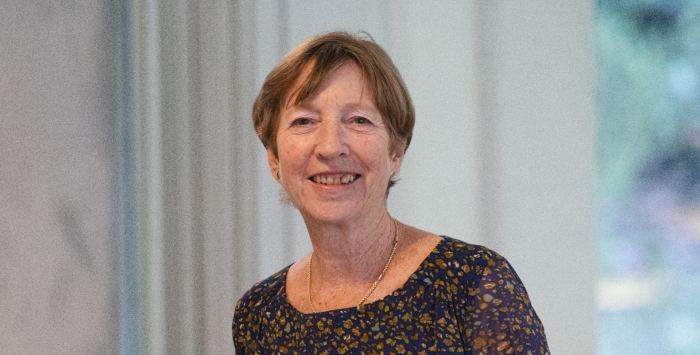
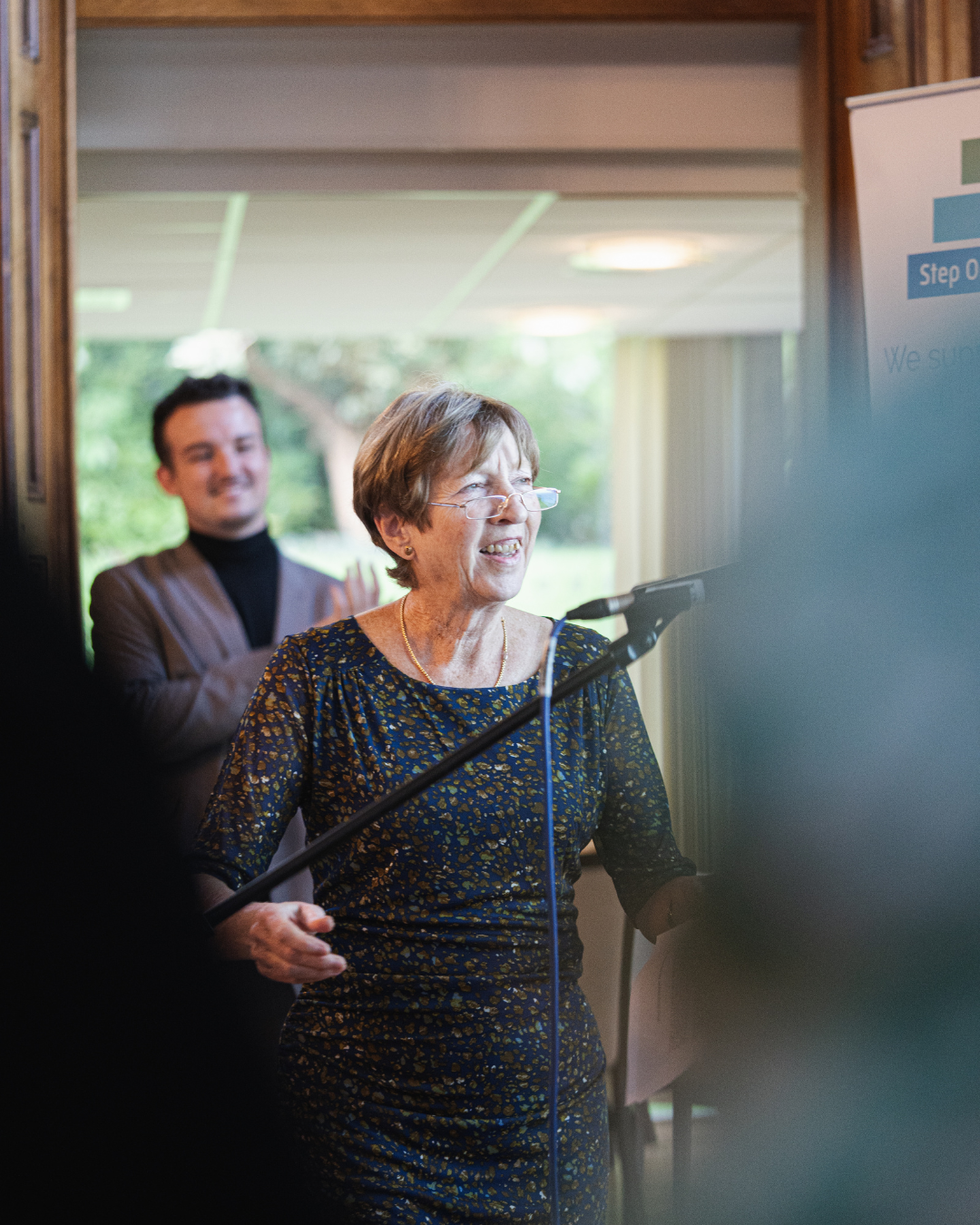
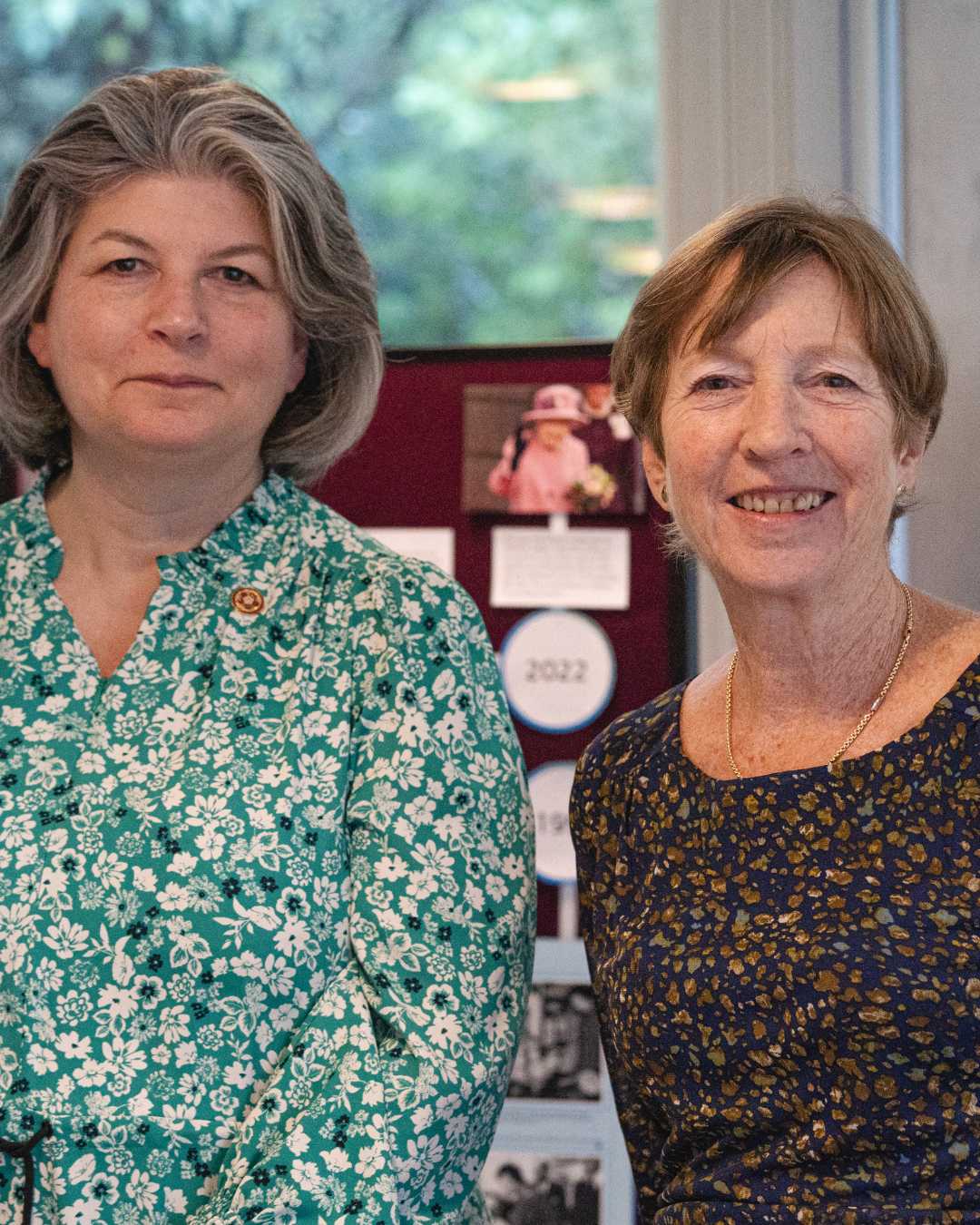
After eight years as Chair of Trustees at Step One Charity, Sue Sutherland has stepped down from the role. During her time as Chair, she helped guide the organisation through significant challenges and important developments.
In this reflection, Sue looks back on what inspired her to join the charity, the achievements she is most proud of, and her hopes for Step One’s future.
I’ve been fortunate to have a long career in healthcare, working across a range of organisations and later taking on non-executive roles, including Chair of a university board and Vice Chair of Hospiscare. Those experiences made me reflect on how I could use my skills and knowledge to give something back.
So when I was approached to become Chair of Step One Charity, I was delighted. It felt like an opportunity to support an organisation doing important work and help it reach its potential.
What also attracted me to the role was that Step One focuses on mental health, an area I hadn’t worked in directly before. That made the role both meaningful and intellectually exciting, giving me the chance to contribute while also learning something new.
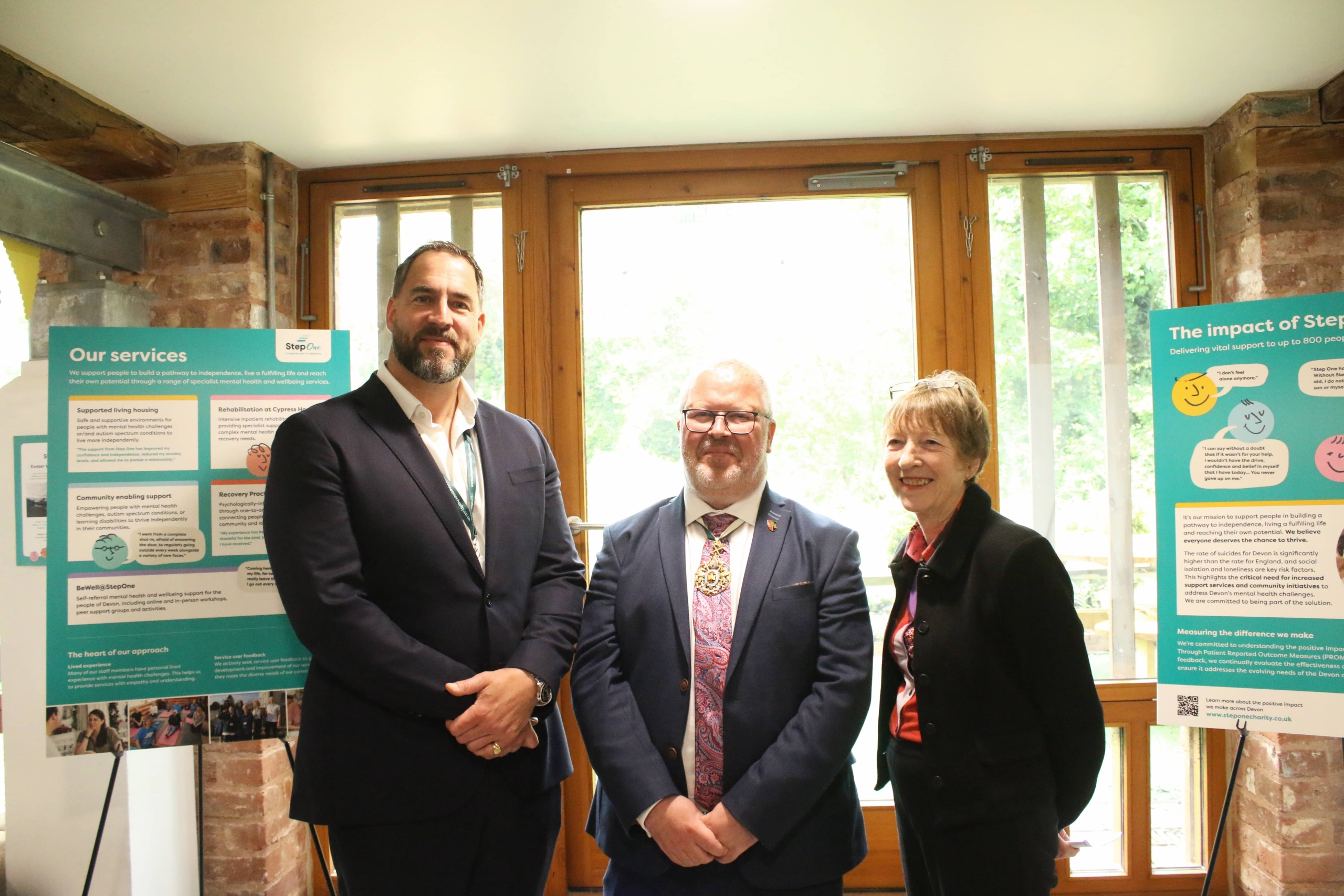
Looking back, the accomplishment I’m most proud of is strengthening the charity’s governance and focus on the people we serve. When I first joined, the board’s structure focused heavily on finance, but there wasn’t a dedicated focus on quality of care.
One of my first priorities was establishing a Quality, Assurance and Improvement Committee. This ensured that trustees paid close attention not only to finances but also to the wellbeing and outcomes of the people supported by Step One, as well as the health of the organisation itself. Today, that committee reviews standards, audits, staff wellbeing, and service quality, helping ensure we deliver safe and high-quality care.
Another significant milestone was the purchase of Granvue, a bungalow next to Cypress that became a crisis support service. It has since played an important role in providing short-term support for people experiencing a mental health crisis, helping them stabilise without needing hospital admission.
Finally, during my time as Chair we also began developing Step One’s fundraising strategy. At the time, the charity relied almost entirely on NHS and social care funding, so we created a strategy to diversify income through grants and community fundraising. While fundraising always presents challenges, establishing that strategy was an important step toward building long-term sustainability for the organisation.
One of the biggest challenges during my time as Chair was the COVID-19 pandemic. Like many organisations, we suddenly had to change the way we worked almost overnight.
Despite the disruption, the organisation responded incredibly well. Staff stepped up in remarkable ways to keep services running and continue supporting people through a very difficult time. The leadership team ensured both staff and the people we support were cared for, and the organisation showed real resilience during that period.
Another ongoing challenge has been leadership turnover within the charity sector. This can make maintaining long-term stability more difficult, even when passionate and talented people are involved.
While there isn’t a simple solution, it remains an important focus for trustees, ensuring strong leadership, supporting staff, and continuing to build a committed team that shares the organisation’s mission.
During my time with the charity, I’ve seen several important shifts in how mental health is understood and discussed.
Firstly, there is far greater public awareness and openness around mental health. Conversations that were once difficult or avoided are now much more common, and people increasingly feel able to speak openly about their experiences. The COVID-19 pandemic accelerated this change, as many people became more aware of their own mental wellbeing and the importance of talking about it.
Secondly, there is a growing recognition that more people are experiencing mental health challenges. This has increased the demand for services and highlighted the importance of strong community support.
Finally, there is a much broader understanding that mental health affects every aspect of a person’s life. It is closely connected to physical health, lifestyle, and the wider environment. As a result, organisations like Step One are increasingly taking a more holistic approach, supporting not just someone’s mental health, but also encouraging healthy habits, physical wellbeing, and overall quality of life.
Together, these changes represent a positive shift toward greater understanding, openness, and more comprehensive support for those experiencing mental health difficulties.
One of the biggest challenges facing Step One in the coming years is financial sustainability. Like many charities, the organisation relies on a combination of NHS funding, social care funding, and fundraising. Maintaining strong relationships with these partners, and continuing to develop fundraising support, will be essential to ensuring the charity can continue its work.
At the same time, the wider mental health system remains under significant pressure. Services are often under-resourced, which makes the support provided by organisations like Step One even more important.
Another challenge will be ensuring that mental health remains high on the public agenda. While awareness has grown in recent years, wider issues such as the cost-of-living crisis can shift attention elsewhere, even though financial pressures often have a direct impact on people’s mental wellbeing.
Looking ahead, there are also opportunities to strengthen partnerships with organisations such as universities and research groups. By engaging more with research and innovation, charities like Step One can continue to develop new ways to support people and contribute to the broader understanding of mental health.
My advice to any future Chair is to stay connected to the charity’s history and founding vision. Step One was built on the belief that people should be supported to live to their full potential, regardless of the challenges they face. Keeping that principle at the centre of every decision is essential.
The charity’s founder had a remarkable vision for supporting people’s wellbeing and independence, long before many of these ideas became widely recognised. Her belief in helping individuals build confidence, community, and purpose still underpins the work Step One does today.
By staying true to those values, supporting people to thrive, not just manage their difficulties, the organisation can continue to make a meaningful difference. If that vision remains at the heart of the charity, Step One will be well placed to continue its work for many years to come.
Looking ahead, I would like to see Step One return to a more holistic approach to supporting people. In the past, the charity placed a strong emphasis on helping individuals develop practical skills that could lead to greater independence and, where possible, employment.
In the coming years, I would love to see the charity strengthen these kinds of pathways, helping people not only manage their mental health but also build the skills and independence that allow them to thrive. Supporting individuals to feel connected, capable, and valued within their communities is a powerful part of what Step One can offer.

As Sue steps down from her role as Chair, we would like to extend our heartfelt thanks for the dedication, leadership, and care she has given to Step One over the past eight years.
Sue’s guidance has helped shape the organisation during a time of both challenge and growth. Her commitment to strengthening governance, championing quality of care, and supporting the people at the heart of Step One’s work has left a lasting impact on the charity.
Beyond her leadership, Sue has meant a great deal to many people across the organisation. Her thoughtfulness, encouragement, and belief in the mission of Step One have supported staff, trustees, and the people we serve alike.
We are incredibly grateful for the time, knowledge, and passion Sue has shared with the charity, and we wish her all the very best for the future.
 https://steponecharity.co.uk/wp-content/uploads/2026/03/Sue-Sutherland-OBE-Blog.png
355
700
Isaac Mann
https://steponecharity.co.uk/wp-content/uploads/2024/02/step-one-wellbeing.svg
Isaac Mann2026-03-06 11:30:192026-03-06 11:30:19Supporting Change: Sue Sutherland Reflects on Her Time as Chair
https://steponecharity.co.uk/wp-content/uploads/2026/03/Sue-Sutherland-OBE-Blog.png
355
700
Isaac Mann
https://steponecharity.co.uk/wp-content/uploads/2024/02/step-one-wellbeing.svg
Isaac Mann2026-03-06 11:30:192026-03-06 11:30:19Supporting Change: Sue Sutherland Reflects on Her Time as Chair https://steponecharity.co.uk/wp-content/uploads/2026/02/Legacy-blog-2026.png
355
700
Isaac Mann
https://steponecharity.co.uk/wp-content/uploads/2024/02/step-one-wellbeing.svg
Isaac Mann2026-02-11 15:19:122026-02-11 15:34:31Leave a Legacy of Support: Make a Will Week 2026
https://steponecharity.co.uk/wp-content/uploads/2026/02/Legacy-blog-2026.png
355
700
Isaac Mann
https://steponecharity.co.uk/wp-content/uploads/2024/02/step-one-wellbeing.svg
Isaac Mann2026-02-11 15:19:122026-02-11 15:34:31Leave a Legacy of Support: Make a Will Week 2026 https://steponecharity.co.uk/wp-content/uploads/2025/09/Website-News-Headers-2024-1.png
355
700
Isaac Mann
https://steponecharity.co.uk/wp-content/uploads/2024/02/step-one-wellbeing.svg
Isaac Mann2025-09-12 09:52:112025-09-12 09:52:11Walking for a Cause: The Journey Behind the 300,000 Steps
https://steponecharity.co.uk/wp-content/uploads/2025/09/Website-News-Headers-2024-1.png
355
700
Isaac Mann
https://steponecharity.co.uk/wp-content/uploads/2024/02/step-one-wellbeing.svg
Isaac Mann2025-09-12 09:52:112025-09-12 09:52:11Walking for a Cause: The Journey Behind the 300,000 Steps https://steponecharity.co.uk/wp-content/uploads/2025/09/Website-News-Headers-2024.png
355
700
Isaac Mann
https://steponecharity.co.uk/wp-content/uploads/2024/02/step-one-wellbeing.svg
Isaac Mann2025-09-05 10:38:162025-09-05 10:40:15Neurodiversity Training: More Than a Legal Obligation, It’s a Key to Unlocking Talent
https://steponecharity.co.uk/wp-content/uploads/2025/09/Website-News-Headers-2024.png
355
700
Isaac Mann
https://steponecharity.co.uk/wp-content/uploads/2024/02/step-one-wellbeing.svg
Isaac Mann2025-09-05 10:38:162025-09-05 10:40:15Neurodiversity Training: More Than a Legal Obligation, It’s a Key to Unlocking Talent https://steponecharity.co.uk/wp-content/uploads/2025/07/Website-News-Headers-2024-49.png
355
700
Isaac Mann
https://steponecharity.co.uk/wp-content/uploads/2024/02/step-one-wellbeing.svg
Isaac Mann2025-07-25 09:23:362025-07-25 09:24:05Schizophrenia Awareness Day
https://steponecharity.co.uk/wp-content/uploads/2025/07/Website-News-Headers-2024-49.png
355
700
Isaac Mann
https://steponecharity.co.uk/wp-content/uploads/2024/02/step-one-wellbeing.svg
Isaac Mann2025-07-25 09:23:362025-07-25 09:24:05Schizophrenia Awareness Day https://steponecharity.co.uk/wp-content/uploads/2025/07/Emotional-Resilience-1.png
355
700
Isaac Mann
https://steponecharity.co.uk/wp-content/uploads/2024/02/step-one-wellbeing.svg
Isaac Mann2025-07-17 09:32:002025-07-17 09:32:00Your Nervous System at Work
https://steponecharity.co.uk/wp-content/uploads/2025/07/Emotional-Resilience-1.png
355
700
Isaac Mann
https://steponecharity.co.uk/wp-content/uploads/2024/02/step-one-wellbeing.svg
Isaac Mann2025-07-17 09:32:002025-07-17 09:32:00Your Nervous System at Work https://steponecharity.co.uk/wp-content/uploads/2025/07/Suicide-Awareness-2.png
355
700
Isaac Mann
https://steponecharity.co.uk/wp-content/uploads/2024/02/step-one-wellbeing.svg
Isaac Mann2025-07-16 09:07:502025-07-16 13:18:51Let’s Talk About Mental Health and Wellbeing at Work
https://steponecharity.co.uk/wp-content/uploads/2025/07/Suicide-Awareness-2.png
355
700
Isaac Mann
https://steponecharity.co.uk/wp-content/uploads/2024/02/step-one-wellbeing.svg
Isaac Mann2025-07-16 09:07:502025-07-16 13:18:51Let’s Talk About Mental Health and Wellbeing at Work https://steponecharity.co.uk/wp-content/uploads/2025/07/Website-News-Headers-2024-37.png
355
700
Isaac Mann
https://steponecharity.co.uk/wp-content/uploads/2024/02/step-one-wellbeing.svg
Isaac Mann2025-07-03 08:06:532025-07-03 08:06:53My Week as an Intern at Step One
https://steponecharity.co.uk/wp-content/uploads/2025/07/Website-News-Headers-2024-37.png
355
700
Isaac Mann
https://steponecharity.co.uk/wp-content/uploads/2024/02/step-one-wellbeing.svg
Isaac Mann2025-07-03 08:06:532025-07-03 08:06:53My Week as an Intern at Step One https://steponecharity.co.uk/wp-content/uploads/2025/06/Website-News-Headers-2024-36.png
355
700
Isaac Mann
https://steponecharity.co.uk/wp-content/uploads/2024/02/step-one-wellbeing.svg
Isaac Mann2025-06-24 12:17:032025-06-24 12:17:44A sneak peek into our Team Building Day
https://steponecharity.co.uk/wp-content/uploads/2025/06/Website-News-Headers-2024-36.png
355
700
Isaac Mann
https://steponecharity.co.uk/wp-content/uploads/2024/02/step-one-wellbeing.svg
Isaac Mann2025-06-24 12:17:032025-06-24 12:17:44A sneak peek into our Team Building Day