Your Nervous System at Work

Written by Dr. Chandanee Kotecha in collaboration with Rosie Eustace (University of Exeter Intern).
When we think about stress at work, we often focus on external things, tight deadlines, a tough manager, endless meetings. But what if we zoomed in a little closer, inside our own bodies?
Because here’s the thing: before we even think about what’s happening around us, our nervous system is already responding.
That slight jolt when your manager calls an unexpected meeting. The racing heart before a presentation. The brain fog that rolls in after a tense conversation. These aren’t character flaws or weaknesses: they’re nervous system responses.
Understanding our nervous systems can be a game-changer, not just for our wellbeing, but for how we relate to ourselves and others at work.
From an evolutionary perspective, our nervous system’s main job is survival. Long before there were offices and emails, our bodies developed complex systems to detect danger and help us respond quickly.
Our sensory and autonomic systems are lightning-fast, and our nervous system is like a smoke alarm. Helpful when it’s working properly, overwhelming when it goes off just because you burned your toast. It’s trying to protect you, even when the danger isn’t as serious as it seems.
Our nervous system isn’t checking whether the threat is logical or appropriate. It’s simply asking:
While we’re no longer running from predators, our nervous system still reacts to modern-day stressors, like deadlines or difficult conversations, as if they could be threats and our bodies respond automatically, even if the danger isn’t life-threatening.
Let’s look at a few examples:
These are nervous system responses. They’re not about overreacting or being too sensitive. They’re about your body trying to interpret whether you’re safe.
The problem is, when our workplace culture constantly triggers our threat system, we can find ourselves stuck in high-alert or shut-down states which can be referred to as hyperarousal (anxious, agitated, overactive) or hypoarousal (disconnected, withdrawn, numb).
Neither state is wrong. They’re survival strategies. But staying stuck in them over time can take a toll on our health, relationships, and ability to work effectively.
The more we understand our nervous system, the more choice we start to have. We can start to notice our own cues and respond with compassion rather than criticism.
Take 10 seconds. Drop your shoulders. Unclench your jaw. Take a slow breath.
How does that make you feel?
We can learn to ask:
This isn’t about controlling your nervous system. It’s about collaborating with it. About building awareness, noticing patterns, and gently nudging your body back toward regulation, especially in environments that don’t always feel safe or predictable.
When teams and leaders understand how the nervous system works, we become more compassionate and connected.
This awareness also opens the door to meaningful conversations around psychological safety, sensory needs, and regulation strategies, which are essential for thriving at work.
Once we understand what’s happening in our bodies, we can start to work with it, not against it. Simple actions like taking a few deep breaths before a meeting, adjusting your environment to reduce sensory overload, or building in short pauses between tasks can help bring the nervous system back into a more balanced state.
When individuals have tools to regulate, and workplaces create space for that regulation to happen, we see more clarity, creativity, and connection.
Exploring how our nervous system works can help teams move from simply coping to genuinely thriving.
Our Recharge, Thrive, Connect workshop is a practical session designed to help employees:
Whether you’re a small team or a large organisation, this session is a powerful way to shift culture from reactive to proactive, helping people feel safer, more connected, and more engaged in their work.
 https://steponecharity.co.uk/wp-content/uploads/2026/06/Website-News-Headers-2024-24.png
355
700
Isaac Mann
https://steponecharity.co.uk/wp-content/uploads/2024/02/step-one-wellbeing.svg
Isaac Mann2026-07-02 13:26:042026-07-02 15:26:24Celebrating 25 Years of Dedication: Lesley Clift’s Journey with Step One
https://steponecharity.co.uk/wp-content/uploads/2026/06/Website-News-Headers-2024-24.png
355
700
Isaac Mann
https://steponecharity.co.uk/wp-content/uploads/2024/02/step-one-wellbeing.svg
Isaac Mann2026-07-02 13:26:042026-07-02 15:26:24Celebrating 25 Years of Dedication: Lesley Clift’s Journey with Step One https://steponecharity.co.uk/wp-content/uploads/2026/07/Website-News-Headers-2024-26.png
355
700
Isaac Mann
https://steponecharity.co.uk/wp-content/uploads/2024/02/step-one-wellbeing.svg
Isaac Mann2026-07-02 13:25:322026-07-03 09:50:08My week with Step One Charity by Zoe Godfrey
https://steponecharity.co.uk/wp-content/uploads/2026/07/Website-News-Headers-2024-26.png
355
700
Isaac Mann
https://steponecharity.co.uk/wp-content/uploads/2024/02/step-one-wellbeing.svg
Isaac Mann2026-07-02 13:25:322026-07-03 09:50:08My week with Step One Charity by Zoe Godfrey https://steponecharity.co.uk/wp-content/uploads/2026/06/Website-News-Headers-2024-22.png
355
700
Isaac Mann
https://steponecharity.co.uk/wp-content/uploads/2024/02/step-one-wellbeing.svg
Isaac Mann2026-06-12 09:52:052026-06-12 14:56:05Nine Years of Service: Robert Williams Reflects on His Time as Trustee
https://steponecharity.co.uk/wp-content/uploads/2026/06/Website-News-Headers-2024-22.png
355
700
Isaac Mann
https://steponecharity.co.uk/wp-content/uploads/2024/02/step-one-wellbeing.svg
Isaac Mann2026-06-12 09:52:052026-06-12 14:56:05Nine Years of Service: Robert Williams Reflects on His Time as Trustee https://steponecharity.co.uk/wp-content/uploads/2026/05/Website-News-Headers-2024-20.png
355
700
Isaac Mann
https://steponecharity.co.uk/wp-content/uploads/2024/02/step-one-wellbeing.svg
Isaac Mann2026-05-08 10:25:462026-05-08 11:23:26Mental Health Awareness Week: Taking Action Together
https://steponecharity.co.uk/wp-content/uploads/2026/05/Website-News-Headers-2024-20.png
355
700
Isaac Mann
https://steponecharity.co.uk/wp-content/uploads/2024/02/step-one-wellbeing.svg
Isaac Mann2026-05-08 10:25:462026-05-08 11:23:26Mental Health Awareness Week: Taking Action Together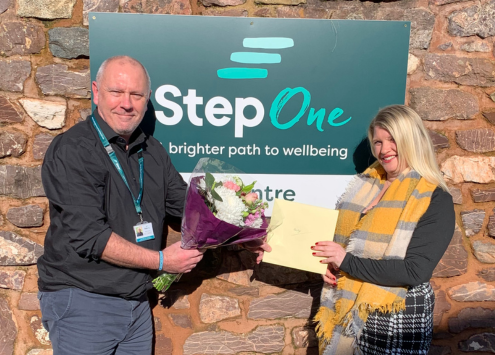 https://steponecharity.co.uk/wp-content/uploads/2026/02/Becky-T-15-years.png
355
700
Isaac Mann
https://steponecharity.co.uk/wp-content/uploads/2024/02/step-one-wellbeing.svg
Isaac Mann2026-04-17 13:42:282026-04-17 13:42:2815 Years of Impact: Becky Tucker’s Journey at Step One
https://steponecharity.co.uk/wp-content/uploads/2026/02/Becky-T-15-years.png
355
700
Isaac Mann
https://steponecharity.co.uk/wp-content/uploads/2024/02/step-one-wellbeing.svg
Isaac Mann2026-04-17 13:42:282026-04-17 13:42:2815 Years of Impact: Becky Tucker’s Journey at Step One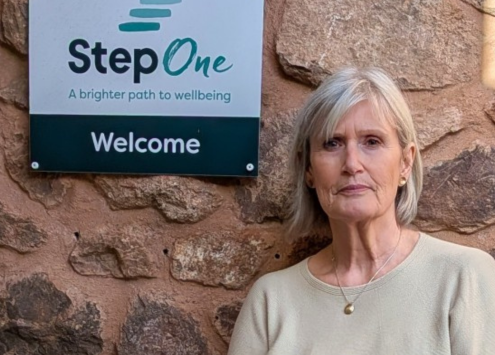 https://steponecharity.co.uk/wp-content/uploads/2026/02/5-minutes-with-Lorna.png
355
700
Isaac Mann
https://steponecharity.co.uk/wp-content/uploads/2024/02/step-one-wellbeing.svg
Isaac Mann2026-03-24 09:40:262026-03-24 10:21:275 minutes with Lorna Collingwood-Burke
https://steponecharity.co.uk/wp-content/uploads/2026/02/5-minutes-with-Lorna.png
355
700
Isaac Mann
https://steponecharity.co.uk/wp-content/uploads/2024/02/step-one-wellbeing.svg
Isaac Mann2026-03-24 09:40:262026-03-24 10:21:275 minutes with Lorna Collingwood-Burke https://steponecharity.co.uk/wp-content/uploads/2026/03/Sue-Sutherland-OBE-Blog.png
355
700
Isaac Mann
https://steponecharity.co.uk/wp-content/uploads/2024/02/step-one-wellbeing.svg
Isaac Mann2026-03-06 11:30:192026-03-12 10:13:44Supporting Change: Sue Sutherland Reflects on Her Time as Chair
https://steponecharity.co.uk/wp-content/uploads/2026/03/Sue-Sutherland-OBE-Blog.png
355
700
Isaac Mann
https://steponecharity.co.uk/wp-content/uploads/2024/02/step-one-wellbeing.svg
Isaac Mann2026-03-06 11:30:192026-03-12 10:13:44Supporting Change: Sue Sutherland Reflects on Her Time as Chair https://steponecharity.co.uk/wp-content/uploads/2026/02/Legacy-blog-2026.png
355
700
Isaac Mann
https://steponecharity.co.uk/wp-content/uploads/2024/02/step-one-wellbeing.svg
Isaac Mann2026-02-11 15:19:122026-02-11 15:34:31Leave a Legacy of Support: Make a Will Week 2026
https://steponecharity.co.uk/wp-content/uploads/2026/02/Legacy-blog-2026.png
355
700
Isaac Mann
https://steponecharity.co.uk/wp-content/uploads/2024/02/step-one-wellbeing.svg
Isaac Mann2026-02-11 15:19:122026-02-11 15:34:31Leave a Legacy of Support: Make a Will Week 2026 https://steponecharity.co.uk/wp-content/uploads/2025/09/Website-News-Headers-2024-1.png
355
700
Isaac Mann
https://steponecharity.co.uk/wp-content/uploads/2024/02/step-one-wellbeing.svg
Isaac Mann2025-09-12 09:52:112025-09-12 09:52:11Walking for a Cause: The Journey Behind the 300,000 Steps
https://steponecharity.co.uk/wp-content/uploads/2025/09/Website-News-Headers-2024-1.png
355
700
Isaac Mann
https://steponecharity.co.uk/wp-content/uploads/2024/02/step-one-wellbeing.svg
Isaac Mann2025-09-12 09:52:112025-09-12 09:52:11Walking for a Cause: The Journey Behind the 300,000 Steps