Why gardening is great for your mental health and wellbeing

There is increasing evidence which proves that gardens have served not only as places to grow plants and food but also as a way to improve mental health and wellbeing. Due to its relaxing and calming nature, gardens are spaces for people to de-stress, focus, and to connect with their green spaces.
Having a living thing to care for is highly beneficial for those suffering from mental health difficulties as it can be a simple activity to keep their minds occupied and keep them distracted from the more stressful tasks such as work and paying bills.
Ecotherapy (a formal treatment that involves doing activities outside in nature) has been found to aid with mild to severe depression, according to research. This might be due to a combination of regular physical exercise, social interaction, and being outside in nature.
If you would like to find out more about the relationship between nature and mental health then head over to the Mental Health Foundations page – https://www.mentalhealth.org.uk/campaigns/thriving-with-nature/guide
Digging, weeding, raking and trimming are all forms of exercise. Regular exercise reduces and helps to prevent symptoms of anxiety, depression and other mental health issues. This one is perfect if you don’t like going to the gym.
There is so much to see and do in the garden. For example rather than dwelling on the stressful challenges in your day to day life, focus on the birds singing, the trees swaying and the smell of your freshly cut grass. Gardening is a good way to practice mindfulness by focusing on the little things that it happening right before your eyes in your garden.
Lastly, gardening is beneficial for those who want to feel good about themselves. For example, seeing your hard work pay off when your plants and flowers have finally bloomed is a great feeling that boosts your pride.
If you don’t have your own garden, there are still plenty of ways you can include gardening in your life. For example, you could:
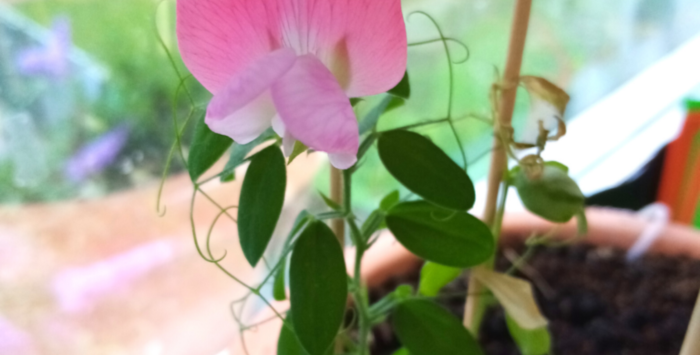
Take a look at the lovely sweet peas our team at Cypress are growing in their green space.
 https://steponecharity.co.uk/wp-content/uploads/2026/06/Website-News-Headers-2024-24.png
355
700
Isaac Mann
https://steponecharity.co.uk/wp-content/uploads/2024/02/step-one-wellbeing.svg
Isaac Mann2026-07-02 13:26:042026-07-02 15:26:24Celebrating 25 Years of Dedication: Lesley Clift’s Journey with Step One
https://steponecharity.co.uk/wp-content/uploads/2026/06/Website-News-Headers-2024-24.png
355
700
Isaac Mann
https://steponecharity.co.uk/wp-content/uploads/2024/02/step-one-wellbeing.svg
Isaac Mann2026-07-02 13:26:042026-07-02 15:26:24Celebrating 25 Years of Dedication: Lesley Clift’s Journey with Step One https://steponecharity.co.uk/wp-content/uploads/2026/07/Website-News-Headers-2024-26.png
355
700
Isaac Mann
https://steponecharity.co.uk/wp-content/uploads/2024/02/step-one-wellbeing.svg
Isaac Mann2026-07-02 13:25:322026-07-03 09:50:08My week with Step One Charity by Zoe Godfrey
https://steponecharity.co.uk/wp-content/uploads/2026/07/Website-News-Headers-2024-26.png
355
700
Isaac Mann
https://steponecharity.co.uk/wp-content/uploads/2024/02/step-one-wellbeing.svg
Isaac Mann2026-07-02 13:25:322026-07-03 09:50:08My week with Step One Charity by Zoe Godfrey https://steponecharity.co.uk/wp-content/uploads/2026/06/Website-News-Headers-2024-22.png
355
700
Isaac Mann
https://steponecharity.co.uk/wp-content/uploads/2024/02/step-one-wellbeing.svg
Isaac Mann2026-06-12 09:52:052026-06-12 14:56:05Nine Years of Service: Robert Williams Reflects on His Time as Trustee
https://steponecharity.co.uk/wp-content/uploads/2026/06/Website-News-Headers-2024-22.png
355
700
Isaac Mann
https://steponecharity.co.uk/wp-content/uploads/2024/02/step-one-wellbeing.svg
Isaac Mann2026-06-12 09:52:052026-06-12 14:56:05Nine Years of Service: Robert Williams Reflects on His Time as Trustee https://steponecharity.co.uk/wp-content/uploads/2026/05/Website-News-Headers-2024-20.png
355
700
Isaac Mann
https://steponecharity.co.uk/wp-content/uploads/2024/02/step-one-wellbeing.svg
Isaac Mann2026-05-08 10:25:462026-05-08 11:23:26Mental Health Awareness Week: Taking Action Together
https://steponecharity.co.uk/wp-content/uploads/2026/05/Website-News-Headers-2024-20.png
355
700
Isaac Mann
https://steponecharity.co.uk/wp-content/uploads/2024/02/step-one-wellbeing.svg
Isaac Mann2026-05-08 10:25:462026-05-08 11:23:26Mental Health Awareness Week: Taking Action Together https://steponecharity.co.uk/wp-content/uploads/2026/02/Becky-T-15-years.png
355
700
Isaac Mann
https://steponecharity.co.uk/wp-content/uploads/2024/02/step-one-wellbeing.svg
Isaac Mann2026-04-17 13:42:282026-04-17 13:42:2815 Years of Impact: Becky Tucker’s Journey at Step One
https://steponecharity.co.uk/wp-content/uploads/2026/02/Becky-T-15-years.png
355
700
Isaac Mann
https://steponecharity.co.uk/wp-content/uploads/2024/02/step-one-wellbeing.svg
Isaac Mann2026-04-17 13:42:282026-04-17 13:42:2815 Years of Impact: Becky Tucker’s Journey at Step One https://steponecharity.co.uk/wp-content/uploads/2026/02/5-minutes-with-Lorna.png
355
700
Isaac Mann
https://steponecharity.co.uk/wp-content/uploads/2024/02/step-one-wellbeing.svg
Isaac Mann2026-03-24 09:40:262026-03-24 10:21:275 minutes with Lorna Collingwood-Burke
https://steponecharity.co.uk/wp-content/uploads/2026/02/5-minutes-with-Lorna.png
355
700
Isaac Mann
https://steponecharity.co.uk/wp-content/uploads/2024/02/step-one-wellbeing.svg
Isaac Mann2026-03-24 09:40:262026-03-24 10:21:275 minutes with Lorna Collingwood-Burke https://steponecharity.co.uk/wp-content/uploads/2026/03/Sue-Sutherland-OBE-Blog.png
355
700
Isaac Mann
https://steponecharity.co.uk/wp-content/uploads/2024/02/step-one-wellbeing.svg
Isaac Mann2026-03-06 11:30:192026-03-12 10:13:44Supporting Change: Sue Sutherland Reflects on Her Time as Chair
https://steponecharity.co.uk/wp-content/uploads/2026/03/Sue-Sutherland-OBE-Blog.png
355
700
Isaac Mann
https://steponecharity.co.uk/wp-content/uploads/2024/02/step-one-wellbeing.svg
Isaac Mann2026-03-06 11:30:192026-03-12 10:13:44Supporting Change: Sue Sutherland Reflects on Her Time as Chair https://steponecharity.co.uk/wp-content/uploads/2026/02/Legacy-blog-2026.png
355
700
Isaac Mann
https://steponecharity.co.uk/wp-content/uploads/2024/02/step-one-wellbeing.svg
Isaac Mann2026-02-11 15:19:122026-02-11 15:34:31Leave a Legacy of Support: Make a Will Week 2026
https://steponecharity.co.uk/wp-content/uploads/2026/02/Legacy-blog-2026.png
355
700
Isaac Mann
https://steponecharity.co.uk/wp-content/uploads/2024/02/step-one-wellbeing.svg
Isaac Mann2026-02-11 15:19:122026-02-11 15:34:31Leave a Legacy of Support: Make a Will Week 2026 https://steponecharity.co.uk/wp-content/uploads/2025/09/Website-News-Headers-2024-1.png
355
700
Isaac Mann
https://steponecharity.co.uk/wp-content/uploads/2024/02/step-one-wellbeing.svg
Isaac Mann2025-09-12 09:52:112025-09-12 09:52:11Walking for a Cause: The Journey Behind the 300,000 Steps
https://steponecharity.co.uk/wp-content/uploads/2025/09/Website-News-Headers-2024-1.png
355
700
Isaac Mann
https://steponecharity.co.uk/wp-content/uploads/2024/02/step-one-wellbeing.svg
Isaac Mann2025-09-12 09:52:112025-09-12 09:52:11Walking for a Cause: The Journey Behind the 300,000 Steps