Mental Health Awareness Week: Taking Action Together
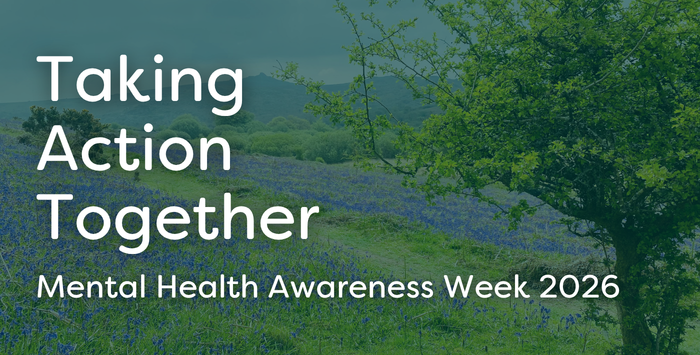
Mental Health Awareness Week is a time to reflect, connect, and take meaningful steps toward better wellbeing, for ourselves and for those around us. This year’s theme, “Action: for yourself, for someone else, for all of us,” highlights how everyday actions can have a lasting impact.
Across Step One, our colleagues are taking action in unique and impactful ways, supporting not only the people we work with but also each other and the wider community. In this blog, three colleagues from across Step One share their perspectives on what that action looks like in practice.
Tom, the BeWell service manager, talks about the importance of looking after your own mental health.
Managing the BeWell community programme has deepened my understanding of my own mental health, particularly around regulating energy and recognising when I need to gently activate my nervous system and when I need to slow down and recover.
My mornings are really intentional. I start with a cold shower, then cycle to work to get my body moving and support that mental transition into the day. Another non-negotiable is protecting my lunch break – stepping away from my desk, eating properly, and getting outside. We’re lucky to be based on the Quay in Exeter, with easy access to places like Cricklepit Mill Wildlife Garden or a walk along the River Exe, simple but powerful ways to reset.
For me, good mental health isn’t about big, dramatic changes; it’s about small, consistent habits that help me feel more regulated, energised, and able to show up as my best self.
Hannah, an Occupational Therapist at Cypress Hospital, talks about how the team support others to look after their mental health.
At Cypress, the Occupational Therapy team focuses on helping people build independence and confidence through meaningful activities and shared goals. Support is centred around what people want and need to do day to day, which could be anything from cooking and gardening, to attending groups, volunteering, or finding new hobbies.
When people first come to Cypress, we go through an initial assessment and work collaboratively to agree goals based on what they would like to do and work on. We then work with the people we support to try to help them achieve these goals. Group activities, one-to-one sessions, and opportunities to share feedback all help people feel heard and involved in shaping their support.
One example is the gardening group, where staff and the people they support worked together to create a new greenhouse and develop skills that can continue beyond Cypress, building not just practical ability but also confidence, connection, and a sense of belonging.
Our in-house psychologist, Chandanee and trainee Tamsyn reflect on the importance of understanding mental health within the wider context of people’s lives.
Mental health is often framed as a personal issue, something to manage through mindset, habits, or therapy. But wellbeing is also shaped by the conditions and contexts we live in, many of which we don’t have full control over. Many of the people Step One supports have experienced trauma, exclusion, or inequality, and these are not just clinical presentations: they are human experiences shaped by being unseen, unheard, or misunderstood.
Financial insecurity, housing instability, discrimination, and access to opportunities all affect mental health in real and lasting ways. The cost-of-living crisis, workplace stress, and feeling unheard within systems meant to support you can leave people stuck in “survival mode” and people cannot think or breathe their way out of financial stress or food poverty. Mental health support must go beyond helping people cope, it should also involve working to change the conditions causing distress.
Recognising these wider influences reduces stigma and shifts the conversation away from blame towards compassion, fairness, and more responsive support systems that help people feel safe, valued, and understood. Wellbeing shouldn’t be a privilege – it is something everyone has the right to experience.
From Tom’s intentional morning routines, to Hannah and the Cypress team’s collaborative approach, to Chandanee’s reminder that systems and society shape our mental health too – this Mental Health Awareness Week shows us that action comes in many forms. Together, they make a meaningful difference for all of us.
 https://steponecharity.co.uk/wp-content/uploads/2026/06/Website-News-Headers-2024-24.png
355
700
Isaac Mann
https://steponecharity.co.uk/wp-content/uploads/2024/02/step-one-wellbeing.svg
Isaac Mann2026-07-02 13:26:042026-07-02 15:26:24Celebrating 25 Years of Dedication: Lesley Clift’s Journey with Step One
https://steponecharity.co.uk/wp-content/uploads/2026/06/Website-News-Headers-2024-24.png
355
700
Isaac Mann
https://steponecharity.co.uk/wp-content/uploads/2024/02/step-one-wellbeing.svg
Isaac Mann2026-07-02 13:26:042026-07-02 15:26:24Celebrating 25 Years of Dedication: Lesley Clift’s Journey with Step One https://steponecharity.co.uk/wp-content/uploads/2026/07/Website-News-Headers-2024-26.png
355
700
Isaac Mann
https://steponecharity.co.uk/wp-content/uploads/2024/02/step-one-wellbeing.svg
Isaac Mann2026-07-02 13:25:322026-07-03 09:50:08My week with Step One Charity by Zoe Godfrey
https://steponecharity.co.uk/wp-content/uploads/2026/07/Website-News-Headers-2024-26.png
355
700
Isaac Mann
https://steponecharity.co.uk/wp-content/uploads/2024/02/step-one-wellbeing.svg
Isaac Mann2026-07-02 13:25:322026-07-03 09:50:08My week with Step One Charity by Zoe Godfrey https://steponecharity.co.uk/wp-content/uploads/2026/06/Website-News-Headers-2024-22.png
355
700
Isaac Mann
https://steponecharity.co.uk/wp-content/uploads/2024/02/step-one-wellbeing.svg
Isaac Mann2026-06-12 09:52:052026-06-12 14:56:05Nine Years of Service: Robert Williams Reflects on His Time as Trustee
https://steponecharity.co.uk/wp-content/uploads/2026/06/Website-News-Headers-2024-22.png
355
700
Isaac Mann
https://steponecharity.co.uk/wp-content/uploads/2024/02/step-one-wellbeing.svg
Isaac Mann2026-06-12 09:52:052026-06-12 14:56:05Nine Years of Service: Robert Williams Reflects on His Time as Trustee https://steponecharity.co.uk/wp-content/uploads/2026/05/Website-News-Headers-2024-20.png
355
700
Isaac Mann
https://steponecharity.co.uk/wp-content/uploads/2024/02/step-one-wellbeing.svg
Isaac Mann2026-05-08 10:25:462026-05-08 11:23:26Mental Health Awareness Week: Taking Action Together
https://steponecharity.co.uk/wp-content/uploads/2026/05/Website-News-Headers-2024-20.png
355
700
Isaac Mann
https://steponecharity.co.uk/wp-content/uploads/2024/02/step-one-wellbeing.svg
Isaac Mann2026-05-08 10:25:462026-05-08 11:23:26Mental Health Awareness Week: Taking Action Together https://steponecharity.co.uk/wp-content/uploads/2026/02/Becky-T-15-years.png
355
700
Isaac Mann
https://steponecharity.co.uk/wp-content/uploads/2024/02/step-one-wellbeing.svg
Isaac Mann2026-04-17 13:42:282026-04-17 13:42:2815 Years of Impact: Becky Tucker’s Journey at Step One
https://steponecharity.co.uk/wp-content/uploads/2026/02/Becky-T-15-years.png
355
700
Isaac Mann
https://steponecharity.co.uk/wp-content/uploads/2024/02/step-one-wellbeing.svg
Isaac Mann2026-04-17 13:42:282026-04-17 13:42:2815 Years of Impact: Becky Tucker’s Journey at Step One https://steponecharity.co.uk/wp-content/uploads/2026/02/5-minutes-with-Lorna.png
355
700
Isaac Mann
https://steponecharity.co.uk/wp-content/uploads/2024/02/step-one-wellbeing.svg
Isaac Mann2026-03-24 09:40:262026-03-24 10:21:275 minutes with Lorna Collingwood-Burke
https://steponecharity.co.uk/wp-content/uploads/2026/02/5-minutes-with-Lorna.png
355
700
Isaac Mann
https://steponecharity.co.uk/wp-content/uploads/2024/02/step-one-wellbeing.svg
Isaac Mann2026-03-24 09:40:262026-03-24 10:21:275 minutes with Lorna Collingwood-Burke https://steponecharity.co.uk/wp-content/uploads/2026/03/Sue-Sutherland-OBE-Blog.png
355
700
Isaac Mann
https://steponecharity.co.uk/wp-content/uploads/2024/02/step-one-wellbeing.svg
Isaac Mann2026-03-06 11:30:192026-03-12 10:13:44Supporting Change: Sue Sutherland Reflects on Her Time as Chair
https://steponecharity.co.uk/wp-content/uploads/2026/03/Sue-Sutherland-OBE-Blog.png
355
700
Isaac Mann
https://steponecharity.co.uk/wp-content/uploads/2024/02/step-one-wellbeing.svg
Isaac Mann2026-03-06 11:30:192026-03-12 10:13:44Supporting Change: Sue Sutherland Reflects on Her Time as Chair https://steponecharity.co.uk/wp-content/uploads/2026/02/Legacy-blog-2026.png
355
700
Isaac Mann
https://steponecharity.co.uk/wp-content/uploads/2024/02/step-one-wellbeing.svg
Isaac Mann2026-02-11 15:19:122026-02-11 15:34:31Leave a Legacy of Support: Make a Will Week 2026
https://steponecharity.co.uk/wp-content/uploads/2026/02/Legacy-blog-2026.png
355
700
Isaac Mann
https://steponecharity.co.uk/wp-content/uploads/2024/02/step-one-wellbeing.svg
Isaac Mann2026-02-11 15:19:122026-02-11 15:34:31Leave a Legacy of Support: Make a Will Week 2026 https://steponecharity.co.uk/wp-content/uploads/2025/09/Website-News-Headers-2024-1.png
355
700
Isaac Mann
https://steponecharity.co.uk/wp-content/uploads/2024/02/step-one-wellbeing.svg
Isaac Mann2025-09-12 09:52:112025-09-12 09:52:11Walking for a Cause: The Journey Behind the 300,000 Steps
https://steponecharity.co.uk/wp-content/uploads/2025/09/Website-News-Headers-2024-1.png
355
700
Isaac Mann
https://steponecharity.co.uk/wp-content/uploads/2024/02/step-one-wellbeing.svg
Isaac Mann2025-09-12 09:52:112025-09-12 09:52:11Walking for a Cause: The Journey Behind the 300,000 Steps